How to Make Healthy Eating Choices When Dining Out Without Overthinking It
Dining out doesn't have to wreck your nutrition goals. Here's how beginners can make smart restaurant choices without obsessing over every bite.
Why Dining Out Feels So Hard If You're Trying to Eat Healthy
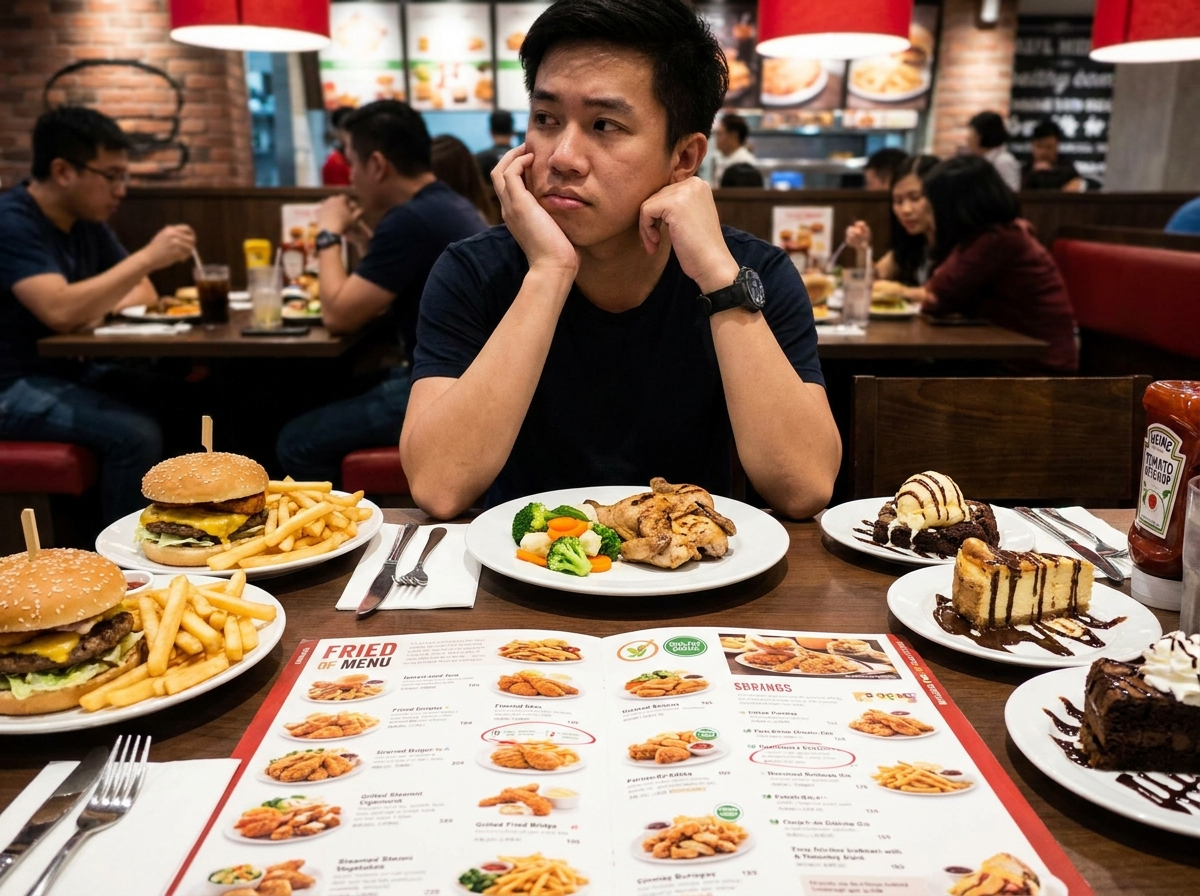
If you're just starting to take nutrition seriously, figuring out how to eat healthy when dining out as a beginner can feel like the hardest part of the week. You've dialled in your meals at home, you're tracking your macros, and then Friday comes around and suddenly you're staring at a menu with zero nutritional context. The good news: a few simple frameworks make restaurant meals far less stressful. This article covers the real reasons dining out undermines your goals, how to build a reliable ordering strategy, and the most common mistakes to stop making.
Americans now consume about 34% of their daily calories from food eaten outside the home , and that share has been rising for decades. Between 1977 and 2018, the share of food energy coming from fast food rose from 5.9% to 16.3%, and the full-service restaurant share more than doubled. This isn't a willpower problem; it's a structural one. Restaurants are designed to encourage you to order more and eat more. Once you understand that, you can build a counter-strategy.
The Hidden Calorie Problem and the Key Insight Behind Healthy Restaurant Choices for Gym Goers
The biggest obstacle to ordering healthy food at restaurants isn't the food itself — it's the calorie gap between what you think you're eating and what you're actually eating. Research shows that Americans underestimate the caloric content of restaurant food items by an average of 110 calories each. Across a full meal with sides, a drink, and a shared appetiser, that gap compounds fast.
An international multi-country study published in The BMJ found that 94% of full-service restaurant meals and 72% of fast-food meals contained 600 calories or more per entrée alone. That figure doesn't include drinks, starters, or dessert. A review of menu data from more than 245 restaurant chains found that entrées averaged 674 calories, appetisers averaged 813 calories, and salads averaged 496 calories — making many "healthy-looking" choices far denser than they appear. This is the core of what dietitians call portion distortion: the restaurant plate trains your eye to treat an outsized serving as a normal one.
There's also a biological layer to this. Research consistently shows that when people are served more food than they need, they eat more than they should, and because restaurants routinely serve excess calories, dining out represents a measurable risk factor for weight gain.
Why Protein Is Your Best Ordering Tool
The most effective counter to hidden calories in restaurant meals is building your order around protein. Protein is directly linked to the sensation of fullness, and higher protein intake increases levels of the satiety hormones GLP-1, peptide YY, and cholecystokinin while decreasing the hunger hormone ghrelin. In practice, this means a protein-anchored plate keeps you satisfied for longer and makes it easier to stop eating before you've overcorrected. This matters especially for how to stay on diet when eating out, where consistency across the week matters more than perfection at any single meal.
If you want to understand exactly how much protein supports your goals on a day-to-day basis, the article on how much protein beginners should eat to build muscle is worth reading alongside this one.
How to Eat Healthy When Dining Out: A Practical Ordering Framework
You don't need to memorise calorie counts. You need a decision framework you can apply in under 60 seconds at any restaurant.
Before you arrive:
- Check the menu online. Most chain restaurants publish full nutrition information. Independent restaurants often list dishes in enough detail to identify the protein anchor and sauce composition.
- Decide your protein source before you sit down. This stops you defaulting to whatever sounds most appealing when you're already hungry.
- Eat a light protein-and-fibre snack beforehand if you're going somewhere with a long wait. Arriving ravenous makes menu navigation far harder.
At the table:
- Build from protein outward. Grilled chicken, fish, steak, shrimp, tofu, or legumes are the foundation. Ask for the preparation method — grilled, baked, or steamed beats fried or crumbed every time.
- Swap the default side. Fries, white rice, or creamy pasta add calories without meaningful protein or fibre. Request steamed vegetables, a side salad, or a smaller portion of a complex carb instead.
- Ask for sauces on the side. Dressings, glazes, and gravies are a primary source of hidden calories in restaurant meals, and restaurants rarely measure them. Getting sauce on the side lets you control how much you actually use.
- Treat the portion as a serving suggestion. Restaurant portions often contain two to three times the recommended serving sizes. Asking for a takeout container when your food arrives — not after you've finished — is a simple way to prevent overeating driven by what's in front of you.
- Order water or sparkling water. Calorie-bearing drinks at restaurants add up quickly, and liquid calories trigger weaker satiety signals than solid food.
For fast food specifically, the fast food healthy options guide principle is: customise, don't eliminate. A burrito bowl with double protein, no cheese or sour cream, and extra vegetables at a fast-casual chain can be a genuinely solid meal. A grilled chicken sandwich without a sauce-heavy bun, paired with a side salad rather than fries, clears the bar too. The key is that the base item matters less than the modifications you make to it.
Tips for eating out and staying healthy also extend to how you eat, not just what you order. Eating slowly, setting your fork down between bites, and pausing to check your hunger level before finishing the plate are all tactics supported by the broader research on social eating habits and calorie awareness. A restaurant table encourages you to keep going; your biology needs a moment to catch up with your stomach.
Common Mistakes That Undermine Healthy Eating at Restaurants
Treating a "healthy" label as a free pass. Salads are the classic example. Multiple controlled studies have found that diners underestimate the calorie count of restaurant meals by 20–40%, with the biggest gaps in chain or fast-casual establishments, and meals marketed as "light" often exceed 500–600 calories because of hidden fats, sugars, and oversized portions. A chicken Caesar salad with croutons, full dressing, and a side of bread can exceed a burger in total caloric load. Check the composition, not the label.
Treating one restaurant meal as a reason to abandon the rest of the day. This is the "may as well" trap. One meal that's 300 calories over your target doesn't erase your week. If you're tracking a calorie deficit for fat loss, a single higher-calorie meal is a speed bump — not a reason to skip your next workout or stop logging.
Ignoring drinks and starters. The study data on restaurant meal calorie counts typically captures entrées only. Researchers note that their restaurant meal measurements likely underestimate total intake because beverages, appetisers, and desserts were not included. If you order a cocktail, a bread basket, and a shared starter before your main, you've already consumed the equivalent of a second entrée in some cases.
Refusing to customise because it feels awkward. Most restaurants accommodate simple substitutions without issue. Asking for a swap or a sauce on the side is not an unusual request — it's something servers handle many times every shift. The temporary awkwardness lasts five seconds; the impact on your nutrition lasts all day.
Make Dining Out Part of Your Plan, Not an Exception to It
Knowing how to eat healthy when dining out as a beginner comes down to three things: anchor your plate on protein, control the extras that come alongside it, and put portion size in your hands before the plate arrives. You don't need to avoid restaurants, you don't need to bring a food scale, and you don't need to interrogate the kitchen. Apply the framework above, and dining out becomes a predictable variable rather than a mystery.
The next step is making sure your tracking reflects reality — including meals you eat out. Sculpt AI makes this easy. Just tell the app what you ordered, for example "grilled salmon with steamed broccoli and a side salad," and it logs the macros instantly. No tapping through menus. You can also use its built-in calorie targets, which are calculated from your actual TDEE rather than a generic formula, so you always know exactly where a restaurant meal sits against your daily numbers. One less thing to overthink.
Sources
- Urban, L. et al. (2016). Energy Contents of Frequently Ordered Restaurant Meals and Comparison with Human Energy Requirements. PMC / Journal of the Academy of Nutrition and Dietetics
- Roberts, S. et al. (2018). Large restaurant portions a global problem, study finds. EurekAlert / The BMJ
- Dreibelbis, C. et al. (2023). Menu Calorie Label Use and Diet Quality: a Cross-Sectional Study. American Journal of Preventive Medicine
- Diliberti, N. et al. (2013). Mitigating the Health Risks of Dining Out: The Need for Standardized Portion Sizes in Restaurants. PMC / Public Health Nutrition
- Rondanelli, M. et al. (2016). Revisiting the role of protein-induced satiation and satiety. ScienceDirect / Food Hydrocolloids
- USDA Economic Research Service (2024). Food Consumption and Nutrient Intake Trends Emerge Over Past Four Decades. USDA ERS
- Healthy Warehouse (2025). Hidden Calories in Your Diet: The Sneaky Sources Sabotaging Your Health Goals. Healthy Warehouse
- BOXROX (2025). How to Spot Hidden Calories in Everyday Foods. BOXROX
Keep going
Related tools on Sculpt
About this article

Written by
Dylan MartinezContent & Community at Sculpt
Dylan leads content and community at Sculpt, including editorial direction for the Sculpt research library.