
How to Eat More Fibre Every Day and Why Your Gut Health Depends on It
Most adults eat far less fibre than they need, and their gut pays the price. Here's what you need to know to fix that today.
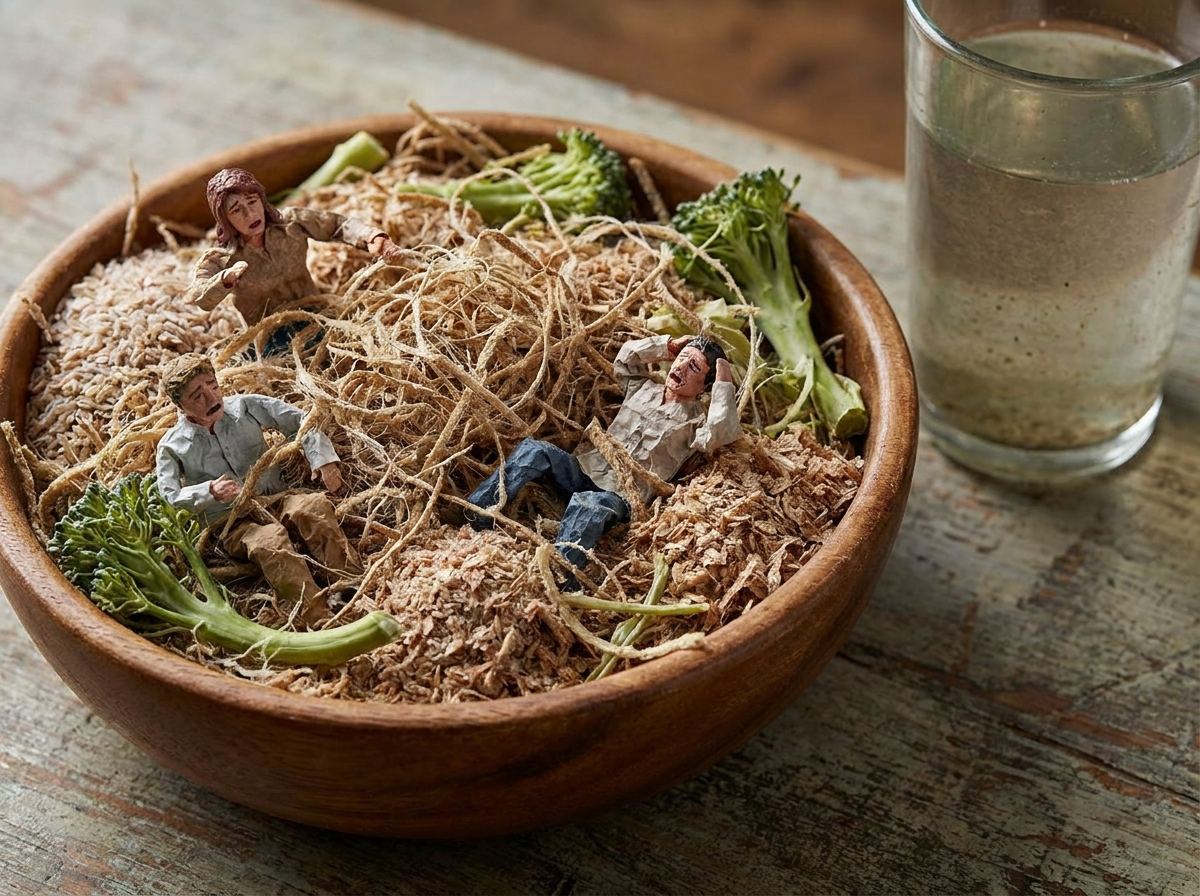
Why Your Fibre Intake Is Probably Wrecking Your Digestive Health
If you're serious about your health, fibre deserves as much attention as protein. Learning how to increase fibre intake for digestive health is one of the highest-return nutrition habits you can build. It affects your bowel regularity, your gut microbiome, your hunger levels, and your long-term disease risk. This article breaks down what fibre actually does inside your gut, why most people fall dangerously short, and the practical steps to close that gap starting today.
Studies show that only about 5% of U.S. adults get enough fibre in their diets, with most people consuming only about 16 grams per day. The gap between what people eat and what their bodies need is enormous, and the consequences show up everywhere from sluggish digestion to poor gut microbiome diversity.
The Science Behind the Daily Fibre Intake Recommendation for Adults
Fibre is not a single nutrient. It is a broad category of plant-based carbohydrates your body cannot fully digest, which makes it exactly what your gut bacteria want to eat. Getting the right amount shapes your entire digestive environment.
The Dietary Guidelines for Americans, 2020–2025, published by the USDA and the U.S. Department of Health and Human Services, recommend adults consume between 22 and 34 grams of fibre per day, depending on age and sex. Most people reach about half that. According to the 2020–2025 Dietary Guidelines for Americans, 90 percent of women and 97 percent of men do not meet the recommended dietary fibre intake.
The reason this matters so much comes down to what fibre produces once it reaches your colon. Short-chain fatty acids (SCFAs) are a group of organic compounds produced by the fermentation of dietary fibre by the human gut microbiota, and they play diverse roles in physiological processes with broad implications for human health. These SCFAs, including butyrate, propionate, and acetate, nourish the cells lining your colon and support immune regulation. The proposed mechanism by which SCFAs beneficially impact gut mucosal thickness and integrity is through inducing mucosal healing and suppressing inflammation. When fibre in the diet is lacking, bacteria degrade the colonic mucus layer. When the diet is rich in fibre, the proportion of mucus-degrading bacteria decreases and the thickness of the colonic mucus layer is re-established.
Soluble vs Insoluble Fibre Explained
Both types matter. They just work differently, and you need both.
Soluble fibre dissolves in water and becomes a gel-like substance in your digestive tract. Soluble fibre dissolves in water, forms a gel-like material in the stomach that slows down digestion, and can help lower cholesterol and blood sugar. It is found in oats, peas, beans, apples, bananas, avocados, citrus fruits, carrots, barley, and psyllium. Soluble fibre also functions as a powerful prebiotic fibre, feeding the beneficial bacteria in your gut microbiome directly.
Insoluble fibre takes a different path. Insoluble fibre does not dissolve in water. It supports the movement of material through the digestive system and adds bulk to stool, making it helpful for people who have constipation or irregular bowel movements. Think wheat bran, the skins of fruit, leafy greens, and whole grain products.
Research has shown that increasing fibre intake can reduce the risk of chronic diseases such as cardiovascular disease, type 2 diabetes, obesity, colon cancer, and inflammation. That range of benefits comes from getting both types, not just one.
A Practical High Fibre Foods List for Beginners
Building your intake from whole foods is always the right starting point. In general, whole foods are better than fibre supplements. Fibre supplements do not provide the variety of fibre, vitamins, minerals, and other nutrients that whole foods do.
Here is how to structure your eating to hit your daily target:
Breakfast
½ cup dry oats— approximately 4g fibre, rich in soluble beta-glucan2 tbsp chia seeds— approximately 10g fibre, mix of both types- Add a sliced apple on the side — approximately 4.4g fibre
Lunch
½ cup cooked lentils— approximately 8g fibre, excellent prebiotic fibre source- Whole grain bread instead of white bread — adds 2–3g per slice
- Add a handful of broccoli — approximately 2.4g per cup
Dinner
½ cup black beans— approximately 7.5g fibre- Brown rice instead of white — adds about 2g per cooked cup
- A side of roasted root vegetables — carrots, parsnips, or sweet potato all contribute 3–5g
Snacks
- Almonds — approximately 3.5g per 30g serving
- Pear with skin on — approximately 5.5g
If you follow this framework across the day you will comfortably reach 25–30g without tracking every bite.
Total dietary fibre intake should be 25 to 30 grams a day from food, not supplements.
Fibre also plays a direct role in weight management. Randomised controlled trials have shown reductions in energy intake and body weight along with increased satiation and reduced hunger following consumption of fibre. The mechanism is partly mechanical: fibre adds bulk and slows gastric emptying, keeping you fuller longer. Short-chain fatty acids, enhanced with the addition of dietary fibre intake, ultimately suppress appetite. If you are working on how to create a calorie deficit without losing muscle, increasing fibre is one of the most effective tools at your disposal because it reduces hunger without cutting calories artificially.
Common Mistakes That Undo Your Fibre Progress
Knowing which foods are high in fibre is only half the job. How you increase your intake matters just as much.
Ramping up too fast is the most common error.
Most people can benefit from increasing their fibre intake, but doing so too quickly or without adequate hydration can lead to bloating, cramping, constipation, or loose stools.
Add 3–5g more per week, not all at once. Your gut microbiome needs time to adjust its bacterial populations to handle the extra fermentation load.
Forgetting water is the second mistake that sends otherwise well-intentioned eaters straight to the bathroom or into painful constipation. "You could run into the extremes of eating too much, where if you're not drinking enough water to hydrate and exceed the amount of soluble and insoluble fibre, you can get constipated," according to research from Tufts University. Fibre absorbs water. Without it, stools harden. Aim to drink enough water daily as you increase your fibre foods.
Relying only on supplements is a third pitfall. A psyllium capsule every morning is not the same as eating a varied, plant-rich diet. Supplements can bridge a gap, but they lack the full matrix of vitamins, minerals, and phytochemicals that give whole foods their broader benefits. If you want to understand the complete picture of what plants bring to your diet, the article on how to eat more fruits and vegetables daily is a useful companion read.
Start Today: Building Your Fibre Habit
Learning how to increase fibre intake for digestive health does not require a complete dietary overhaul. Three changes make the biggest difference: swap refined grains for whole grains, add a legume to one meal per day, and keep fruit with the skin on as your go-to snack. Emerging evidence points to benefits extending well beyond normal laxation and cardiovascular health, through modulation of the gut microbiota. Your gut microbiome, bowel regularity, satiety, and long-term metabolic health all respond to consistent fibre intake, so even small daily upgrades compound fast.
Track your fibre alongside your other macros to see exactly where you stand. Sculpt AI's food logging feature makes this effortless: tell the AI what you ate, point your camera at your plate, or scan a barcode and the app logs your fibre, protein, carbs, and fat instantly. You can see your daily fibre total against your personalised target at a glance, and Sculpt calculates your actual nutritional needs based on your stats and activity rather than a generic estimate. If closing your fibre gap is the goal, seeing the number in real time is the fastest way to close it.
Sources
- McKeown, N.M. et al. (2022). Fibre intake for optimal health: how can healthcare professionals support people to reach dietary recommendations? PMC / The BMJ
- Tufts University (2025). Maxing Out Your Fiber Intake Can Have Broad Health Benefits. Tufts Now
- Cleveland Clinic (2025). How Much Fiber Do You Need per Day? Cleveland Clinic
- UCSF Health. Increasing Fiber Intake. UCSF Health Patient Education
- Mayo Clinic (2024). Dietary fiber: Essential for a healthy diet. Mayo Clinic
- UC Health (2025). Eating the Right Amount of Fiber. UC Health
- The Nutrition Insider (2025). How Much Fiber Per Day Is Recommended? The Nutrition Insider
- Mukhopadhya, I. & Louis, P. (2025). Gut microbiota-derived short-chain fatty acids and their role in human health and disease. Nature Reviews Microbiology
- Harris et al. (2021). Interactions between dietary fibre and the gut microbiota. Proceedings of the Nutrition Society / Cambridge Core
- Peng Zhao et al. (2025). Association between dietary fiber intake and obesity in US adults: from NHANES 1999–2018. Frontiers in Nutrition
- Akhlaghi, M. (2022). The role of dietary fibers in regulating appetite, an overview of mechanisms and weight consequences. PubMed
- Armet et al. (2022). Dietary fiber influence on overall health, with an emphasis on CVD, diabetes, obesity, colon cancer, and inflammation. PMC
Keep going
Related tools on Sculpt
About this article

Written by
Dylan MartinezContent & Community at Sculpt
Dylan leads content and community at Sculpt, including editorial direction for the Sculpt research library.