How to Read a Nutrition Label So You Know Exactly What You Are Eating
Stop guessing what you're eating. This guide breaks down every section of the nutrition facts panel so you can track macros and hit your goals with confidence.
How to Read a Nutrition Label for Fitness Without Getting Confused
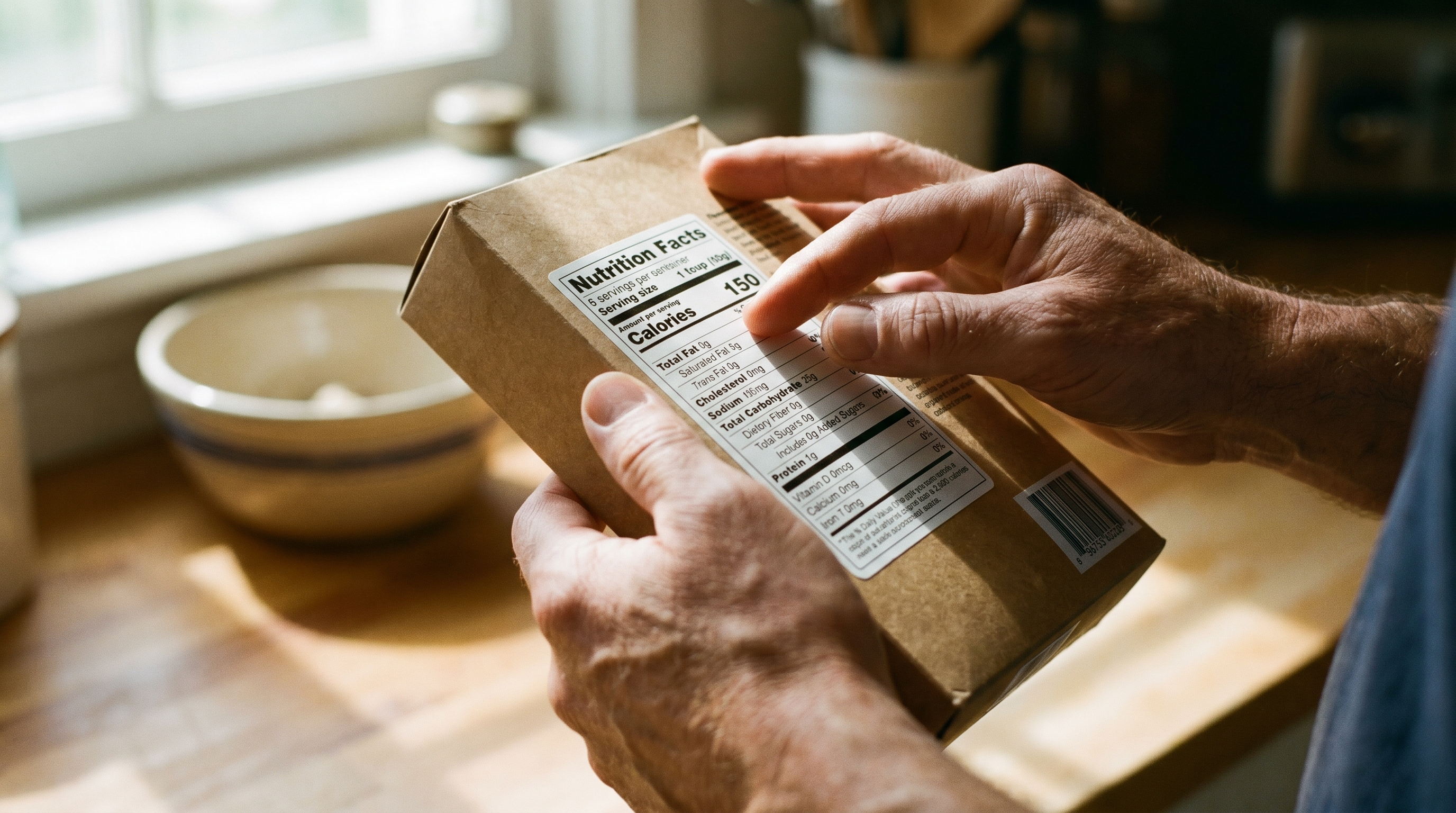
You pick up a protein bar, flip it over, and stare at a wall of numbers. Sound familiar? Learning how to read a nutrition label for fitness is one of those skills that quietly transforms your results. Get it right, and you know precisely what fuel you're putting in your body. This article walks you through every section of the nutrition facts panel, shows you how to use it for calorie tracking and macro targets, and flags the traps that catch beginners off-guard.
Understanding food labels for beginners is less intimidating than it looks. The panel follows a strict top-to-bottom structure, and once you know the logic, you can scan any product in seconds.
The Nutrition Facts Panel Explained: What Every Section Actually Means
Serving Size — The Number That Controls Everything
By law, serving sizes must be based on amounts of foods and beverages that people are actually eating, not what they should be eating.
That sounds reassuring, but it still trips people up. A bag of chips labelled 150 calories might contain two and a half servings. Eat the whole bag and you have consumed 375 calories, not 150.
The serving size line is always your starting point. Every gram of protein, every milligram of sodium, every calorie on the label applies to that amount and only that amount. Check how many servings the container holds, then decide how much you are actually eating before you log anything.
Calories
Calories represent the total energy one serving provides. For reading food labels for calorie tracking purposes, this is the single most-used number. It is also the number the label designers now make largest and boldest on the panel, a deliberate design change intended to reduce confusion.
Macronutrients: Fat, Carbohydrates, and Protein
This is where the label earns its keep for fitness goals. The panel lists:
- Total Fat with sub-lines for saturated fat and trans fat
- Total Carbohydrate with sub-lines for dietary fiber and total sugars (including added sugars)
- Protein in grams
When you want to know how to use nutrition labels to track macros, treat the grams of protein, carbs, and fat as your raw data. Multiply each by your actual serving size, then stack those numbers against your daily targets. If you are not sure what your macro targets should be, it helps to start with a clear picture of your overall goals — our guide on what are macros and how to track them covers the full framework.
The % Daily Value Column
The percent Daily Value (%DV) shows how much a nutrient in a serving of food contributes to a total daily diet, and it can help you determine if a serving of food is high or low in a nutrient.
The rule is simple:
5% DV or less of a nutrient per serving is considered low, and 20% DV or more of a nutrient per serving is considered high.
Use this column as a quick triage tool. High %DV on fiber and potassium? Good. High %DV on saturated fat and sodium? Worth paying attention to.
Dietary fiber, vitamin D, calcium, iron, and potassium are nutrients on the label that Americans generally do not get enough of. Prioritise hitting high %DVs for these during micronutrient tracking. You want to be higher in dietary fiber, vitamin D, calcium, iron, and potassium, and lower in saturated fat, sodium, and added sugars.
Added Sugars: The Line That Changed Everything
The current nutrition facts panel now separates added sugars from total sugars, giving you far more useful information. Added sugars include sugars that are added during the processing of foods (such as sucrose or dextrose), foods packaged as sweeteners (such as table sugar), sugars from syrups and honey, and sugars from concentrated fruit or vegetable juices.
The Daily Value for added sugars is 50 grams per day based on a 2,000 calorie daily diet.
That translates directly to
the Dietary Guidelines for Americans recommendation of limiting calories from added sugars to less than 10 percent of total calories per day.
A snack hitting 14g of added sugars in one serving is using up more than a quarter of that budget in a single go.
The Ingredient List
On a product label, the ingredients are listed in descending order of predominance by weight, with the ingredients used in the greatest amount first, followed by those in smaller amounts. This means whatever appears first is present in the highest quantity. A granola bar that lists "oats, honey, almonds" is genuinely different from one that lists "sugar, palm oil, oat flour."
Scan the top three to five ingredients. They define the product more than any marketing claim on the front of the package.
How to Read a Nutrition Label for Fitness: A Step-by-Step Approach
Apply this sequence every time you pick up a packaged food:
- Check serving size and servings per container. Calculate your actual portion relative to the listed serving.
- Note the calories per serving. Multiply by the number of servings you will eat.
- Pull the macro numbers. Record grams of protein, total carbohydrates, and total fat for your actual portion.
- Scan the %DV column. Flag anything above
20%DV for saturated fat, sodium, or added sugars. - Read the ingredient list top to bottom. If sugar, refined flour, or hydrogenated oil appears in the first three ingredients, factor that into your decision.
- Cross-reference with your daily targets. Does this food fit your calorie and macro budget for the day?
This six-step habit takes about thirty seconds once it becomes automatic.
Common Mistakes People Make When Reading Food Labels
Treating the label numbers as the whole-package numbers. A 200-calorie serving of ice cream in a pint container that holds four servings is 800 calories total. This single error derails more calorie deficits than almost anything else. Always verify the servings per container first.
Ignoring the ingredient list entirely. The nutrition facts panel only shows you quantities. The ingredient list tells you quality. A product with a reasonable calorie count that lists high-fructose corn syrup, refined white flour, and three different sweeteners in its first six ingredients is nutritionally different from one made with whole-food sources at the same calorie level.
Confusing Total Sugars with Added Sugars. Total Sugars on the Nutrition Facts label includes sugars naturally present in many nutritious foods and beverages, such as sugar in milk and fruit, as well as any added sugars that may be present in the product. No Daily Reference Value has been established for total sugars because no recommendation has been made for the total amount to eat in a day. You do not need to stress about the total sugars number in a plain Greek yogurt or a piece of fruit. Focus on the Added Sugars line.
Assuming low-calorie means healthy. Calorie density is one dimension of food quality, not the whole picture. A food can be low in calories and still be poor in protein, fiber, and micronutrient value. Use the label to assess the full picture, not just the calorie count.
What to Do With This Information Starting Today
Three things to take away. First, the serving size controls every number on the label — confirm it before you log anything. Second, use the 5%/20% %DV rule to quickly categorise a nutrient as low or high without doing any mental arithmetic. Third, read the ingredient list in addition to the numbers panel — it tells you what you are actually buying.
Once you start applying these habits consistently alongside your training, your diet stops being guesswork. If you are actively working on how to create a calorie deficit without losing muscle, label literacy is the foundation that makes every tracking method actually work.
Sculpt AI makes this even faster. Point your phone camera at any nutrition label and the app reads the macros automatically, no manual entry needed. It logs calories, protein, carbs, and fat directly against your personalised daily targets, calculated from your actual stats and training frequency rather than a generic estimate. Whether you are cutting, bulking, or maintaining, the numbers are always right in front of you. Download Sculpt and let the label do the work.
Sources
- U.S. Food and Drug Administration (2024). Changes to the Nutrition Facts Label. FDA
- U.S. Food and Drug Administration (2024). The Lows and Highs of Percent Daily Value on the Nutrition Facts Label. FDA
- U.S. Food and Drug Administration (2026). Added Sugars on the Nutrition Facts Label. FDA
- U.S. Food and Drug Administration (2024). How to Understand and Use the Nutrition Facts Label. FDA
- U.S. Food and Drug Administration. Types of Food Ingredients. FDA
- U.S. Food and Drug Administration (2024). What's on the Nutrition Facts Label. FDA
Keep going
Related tools on Sculpt
About this article

Written by
Dylan MartinezContent & Community at Sculpt
Dylan leads content and community at Sculpt, including editorial direction for the Sculpt research library.