

Barbell Standing Front Raise
Shoulders·Weight Plates·Intermediate
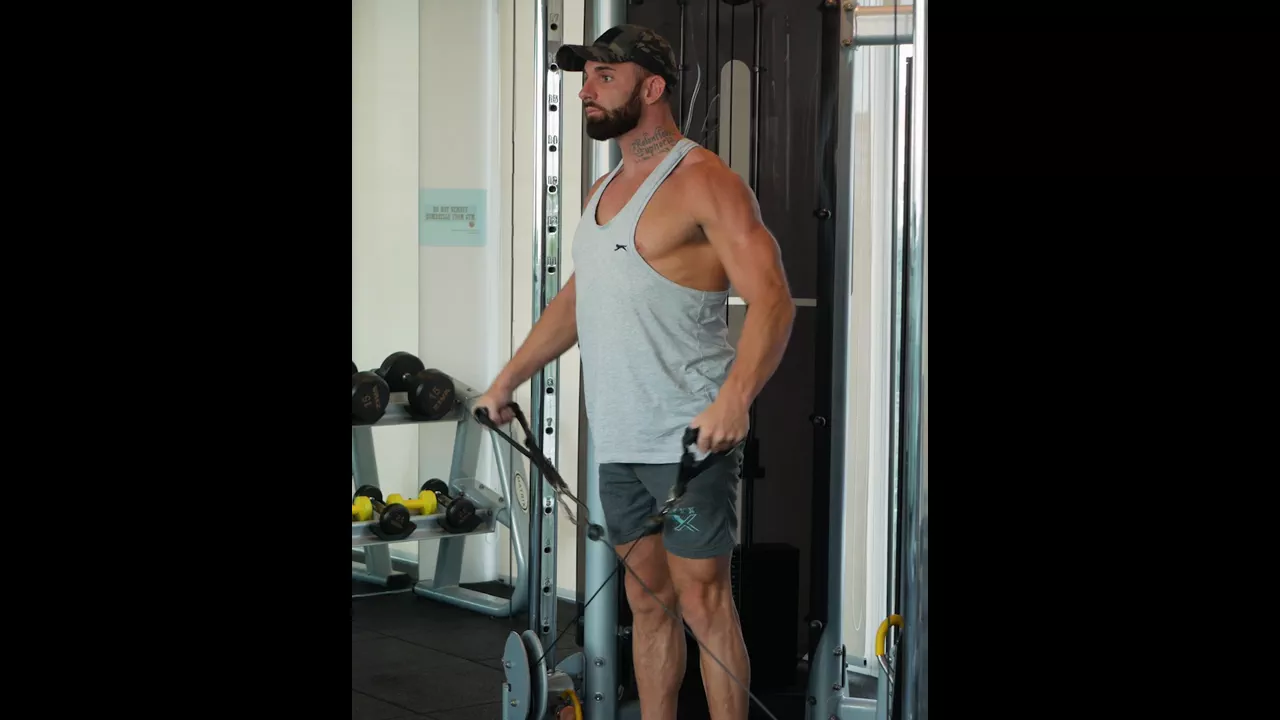
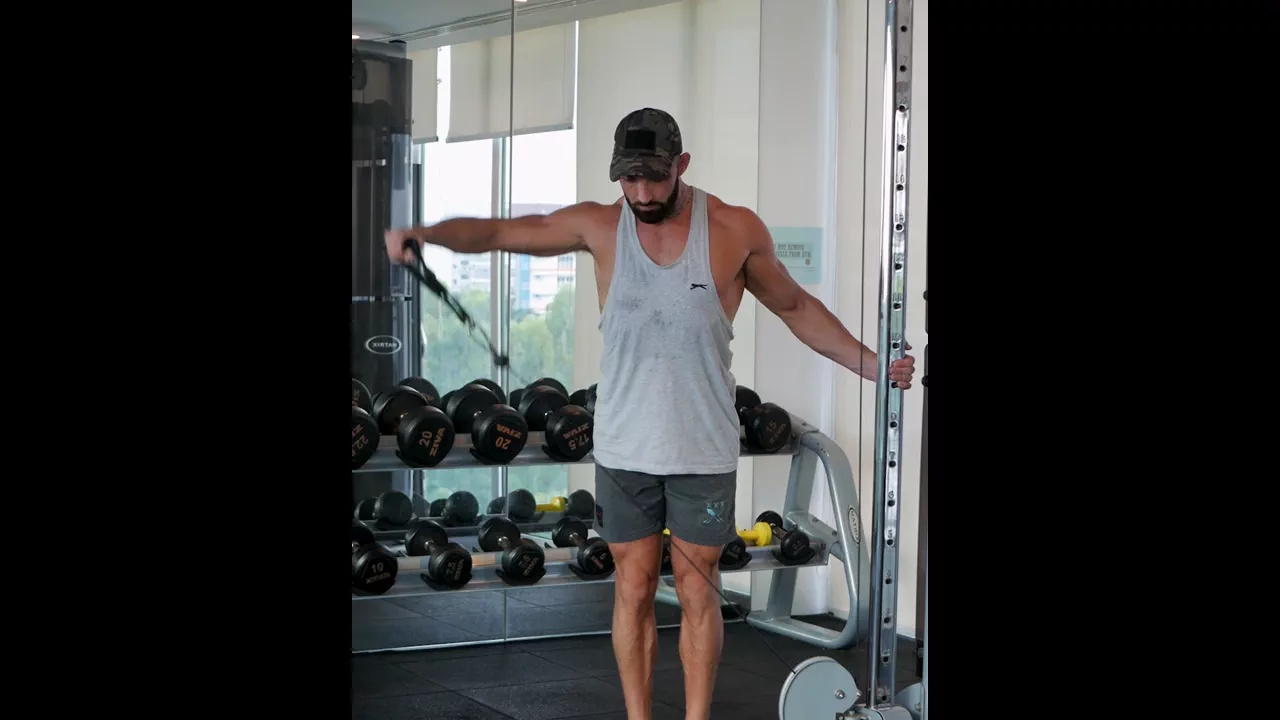
The Cable Standing Lateral Raise Crossover targets the lateral delts using a unique crossover cable path. This variation increases time under tension and allows for a smoother resistance curve compared to dumbbells.
Set a single cable pulley to a low position.
Stand sideways to the machine and grab the handle with the hand farthest from the cable.
Start with your arm crossing in front of your body.
Raise the handle out and up to shoulder height in a lateral arc.
Pause briefly at the top while squeezing your shoulder.
Lower the handle back across your body with control.
Repeat for the desired number of reps before switching sides.
The Cable Standing Lateral Raise Crossover primarily targets the Shoulders.
The Cable Standing Lateral Raise Crossover is an isolation exercise, meaning it focuses on a single muscle group through one joint movement.
You need the following equipment: Cable Machine.
The Cable Standing Lateral Raise Crossover is rated as intermediate difficulty. Some training experience is helpful for performing this exercise safely.
Sculpt synthesizes every input from your body and your training, then builds the plan. No spreadsheets. No guessing.