Equipment

Best Kettlebell Exercises

1 exercises you can do with a kettlebell. Step-by-step form cues, primary muscles, and difficulty levels from the Sculpt training library.

Overview

About kettlebell training

The kettlebell is a cast-iron weight with a handle offset from the center of mass. This design makes it ideal for ballistic and swinging movements (swings, cleans, snatches) that build explosive power, grip strength, and cardiovascular conditioning simultaneously. The kettlebell swing is one of the most efficient exercises for posterior chain development and metabolic conditioning. Kettlebells are also effective for goblet squats, Turkish get-ups, and single-arm pressing.

Training tips

How to train effectively

  • Master the kettlebell swing before attempting cleans or snatches. The hip hinge pattern in the swing is the foundation for all ballistic kettlebell work.
  • Grip the handle in the hook of your fingers, not deep in the palm. This reduces callus formation and improves swing mechanics.
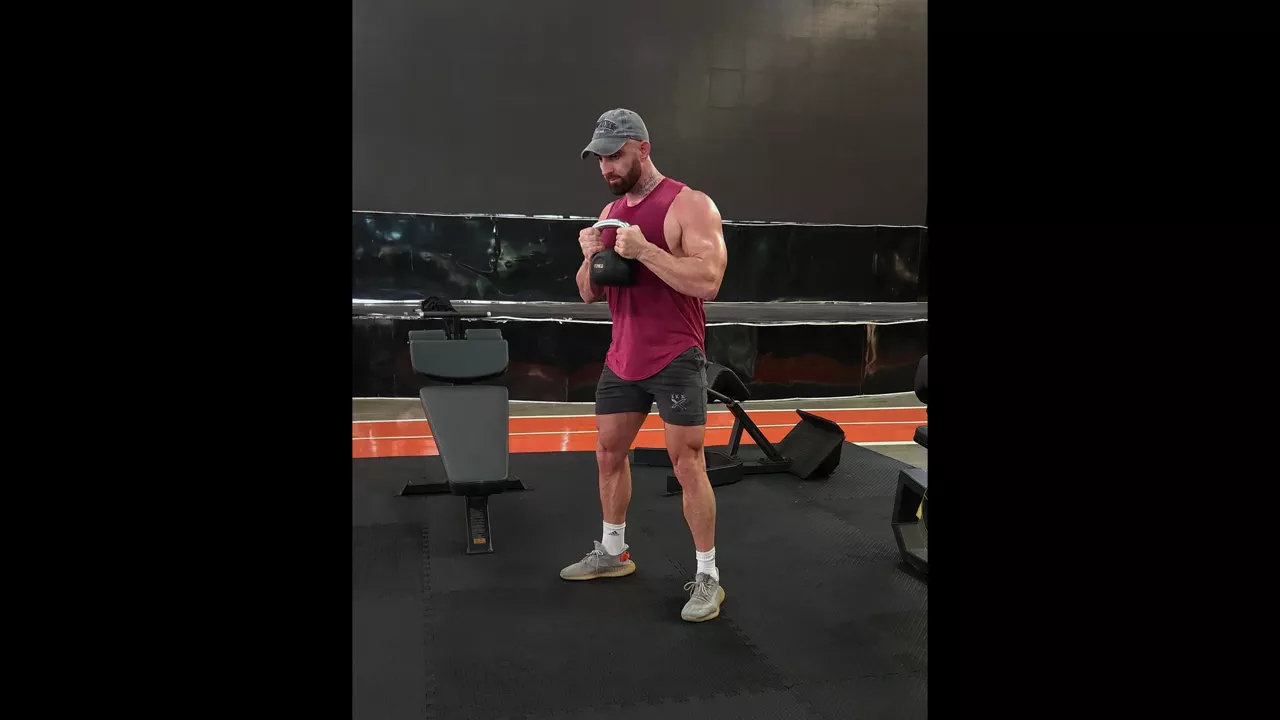
  • Use the goblet squat as a warm-up and teaching tool. Holding the kettlebell in front of the chest naturally encourages upright posture and proper squat depth.
  • Start with a moderate weight. For swings, most men begin with 16 kg and most women with 8 to 12 kg. Technique first, load second.
Common mistakes

What to avoid

  • Squatting the swing instead of hinging. The kettlebell swing is a hip hinge, not a squat. The power comes from the hips snapping forward, not from bending the knees.
  • Pulling the kettlebell with the arms during swings. The arms are just a connection between the body and the weight. The hips generate all the force.
  • Using a weight that is too light for swings. A kettlebell that is too light encourages arm pulling. The right weight forces you to use your hips.

1 exercise

The adaptive health app

Bring training, nutrition, and recovery into one system.

Sculpt synthesizes every input from your body and your training, then builds the plan. No spreadsheets. No guessing.